
$950 Chair Rental in the Chicago Suburbs: Here's the Math
Key Takeaways
On a 50/50 commission split, a stylist doing $8,000/month in services keeps $4,000 — before product charges and fees
The same stylist at Salon Sapphire's $950/month flat chair rental keeps roughly $6,450–$6,650 after rent and supplies — a $30,000+ annual difference
Typical suburban Chicago chair rent runs $1,200–$2,000/month; Salon Sapphire's $950 is deliberately below market
At $950 rent, the break-even is around $3,000–$3,500/month in services — most established stylists clear it easily
Do the Math: Booth Rental vs. Commission for Chicago-Suburb Stylists
Every stylist eventually runs the numbers on a napkin — usually after a big month, comparing the service total to the paycheck. Here is that math, finished properly: both columns, real numbers, and the honest break-even.
The Commission Column
An established stylist doing $8,000 a month in services on a 50/50 split grosses $4,000. Many salons also deduct product or backbar charges of 5–10%, bringing the real take to $3,600–$3,800 before taxes. In exchange, the salon covers rent, utilities, front desk, towels, marketing, walk-in traffic, and the risk of slow months. Early in a career, while a book is still being built, that trade is a fair one.
The Rental Column
The same $8,000 book on a flat chair rental works differently. Suburban Chicago chair rent typically runs $1,200–$2,000 a month. At Salon Sapphire, it's $950 — deliberately below market. The stylist keeps the full $8,000, pays $950 in rent, and covers color and supplies of roughly $400–$600 in a busy month. Net: approximately $6,450–$6,650. Same clients, same hands, same hours — about $2,700 more per month than the commission column, and a swing of more than $30,000 over a year.
The Break-Even
Flat rent has a floor: it doesn't shrink in a slow month. At typical market rents of $1,500 or more, rental starts beating commission at roughly $4,000–$5,000 a month in consistent services. At $950, that line drops to roughly $3,000–$3,500 a month. Stylists with an established, steady book generally cleared that bar years ago. Below it, commission's safety net still earns its cost.
Hidden Costs on Both Sides
Renters become businesses. Booking software, payment processing, insurance, taxes, and marketing are the renter's responsibility — typically $150–$300 a month all-in with current tools, plus real hours. Commission carries less visible costs: the salon sets the price menu, the client list may not belong to the stylist, and income has a structural ceiling. A renter who raises prices $10 keeps all $10; a commission stylist keeps $5.
What the Spreadsheet Misses
Many stylists who would profit from renting stay on commission anyway — because the common alternative is a solo suite behind a closed door, which costs energy, walk-in exposure, and colleagues nearby for a second opinion on a formula. For an established stylist, the real decision is not rental versus commission. It is what kind of rental: an isolated suite, or a chair inside a full working salon.
The Salon Sapphire Model
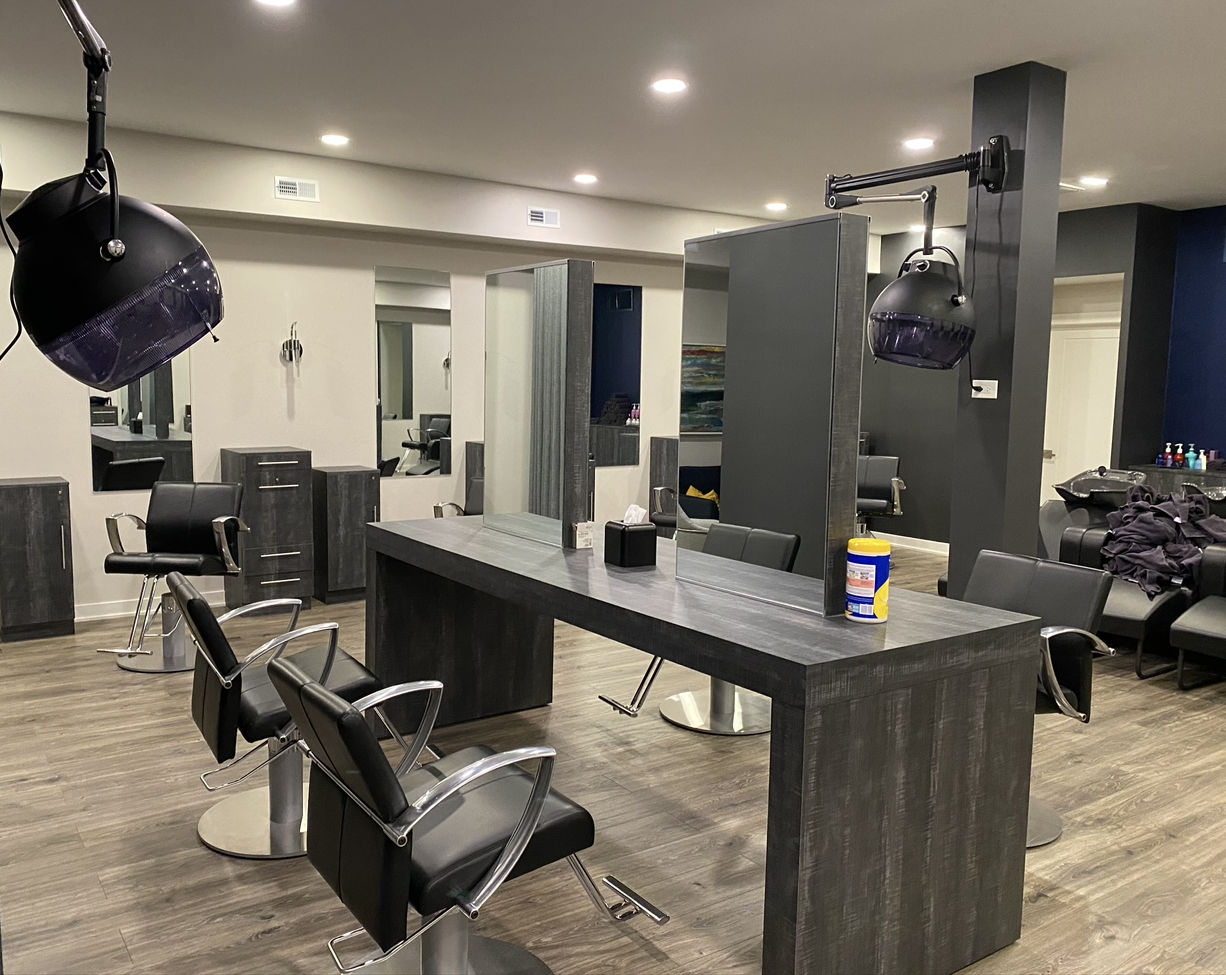
Chair rental at Salon Sapphire is $950 flat per month and includes a secured private station, towel service, facility cleaning, client refreshments, and a busy downtown Clarendon Hills location. Renters keep their own book, booking system, and pricing. Carey Ockrim coaches every renter through the business setup — LLC formation, banking, insurance, software — that most stylists were never taught.
Run Your Own Numbers
Average your last six months of service revenue, including the slow months, and run both columns. At $950 rent, consistent revenue above roughly $3,500 a month favors the rental column. Full details are on our [Rent a Chair page], or text (630) 853-1670 to tour the space in downtown Clarendon Hills.
