Keratin vs. Brazilian Blowout: Which Smoothing Treatment Is Right for You?

The Anti-Frizz Decision Guide for Chicago Humidity (and Winter Static)
Smooth frizz-free hair after salon smoothing treatment at Salon Sapphire Clarendon Hills

Key Takeaways

  • A Brazilian Blowout is a brand of keratin-style smoothing treatment — not a different technology

  • Traditional keratin treatments are the stronger, longer-lasting option: 3–6 months vs. about 10–12 weeks

  • Modern keratin formulas are customizable — your stylist controls the smoothing level, so "keratin" no longer means "flat"

  • Salon Sapphire's stylists offer professional keratin treatments with complimentary consultations to match the formula to your hair

Ask ten people the difference between a keratin treatment and a Brazilian Blowout and you'll get ten confident wrong answers. Here's the one that's actually true: a Brazilian Blowout is a keratin-style smoothing treatment — a brand name, the way Kleenex is a tissue. So the real question isn't keratin versus Brazilian Blowout. It's whether a smoothing treatment fits your hair and your life — and if it does, which version gives you the most for your money. Spoiler from our chairs: for most people, that's a professional keratin treatment. Here's the honest reasoning.

What every smoothing treatment does. They all work the same basic way: a liquid protein formula is applied to the hair, then sealed in with a flat iron. The coating fills in the rough, raised areas of each strand's cuticle. Smoother cuticle, less frizz, more shine, dramatically faster blow-dries. None of them permanently change your hair's structure — this isn't a relaxer or a perm. The treatment washes out gradually, which is a feature: no harsh grow-out line, no long-term commitment.

Why keratin is the stronger play. A traditional keratin treatment is the heavier hitter in the family. It delivers the most dramatic smoothing — wavy hair goes noticeably sleeker, coarse hair gets significantly tamer — and it lasts three to six months with good care. A Brazilian Blowout trades power for convenience: lighter result, and it's gone in about ten to twelve weeks. Do the math on a year: that's two keratin appointments versus four or five Brazilian Blowouts to hold the same frizz-free line. For most people fighting their hair daily, longer-lasting wins — fewer appointments, less cost per smooth week, and a result that actually survives a Chicago humid season.

"But won't keratin make my hair flat?" This is the outdated objection, and it's worth retiring. Modern keratin formulas are customizable — your stylist controls how much smoothing gets sealed in. Want your wave with the frizz deleted? That's a dial, not a different product. Fine-haired clients who were once steered toward lighter treatments can now get a keratin treatment tuned to keep body. The formula and technique choice is exactly what the consultation is for.

The honest trade-offs. Some keratin formulas ask for a short waiting period before your first wash — plan the appointment a few days before a big event, not the morning of. And every smoothing treatment lives or dies at your shower: sulfate-free shampoo is non-negotiable, wash less often if you can, and go easy on chlorine and salt water. Color-treated hair plays beautifully with keratin — sequenced right, the treatment actually helps seal your color in.

One honest caution. Hair that's heavily bleached or damaged needs a professional's judgment on formula — or on whether a bond-repair treatment should come first. Smoothing over damage without addressing it is how people end up unhappy, and a good stylist will tell you the truth in the chair rather than sell you the service.

That consultation is where this decision actually gets made — and at Salon Sapphire, it's complimentary. Our independent stylists offer professional keratin treatments matched to your hair type, your routine, and your maintenance tolerance. Bring your frizz history and your honest washing habits; leave with a plan.

Frizz season doesn't end when summer does — indoor heat in a Chicago winter is its own battle. Call or text (630) 853-1670, or book directly with a stylist on our Staff page, and let's get you three to six months of good hair mornings.
Booth Rental vs. Commission: The Real Math for Chicago-Suburb Stylists

$950 Chair Rental in the Chicago Suburbs: Here's the Math

Salon booth rental stations at Salon Sapphire in Clarendon Hills IL

Key Takeaways

  • On a 50/50 commission split, a stylist doing $8,000/month in services keeps $4,000 — before product charges and fees

  • The same stylist at Salon Sapphire's $950/month flat chair rental keeps roughly $6,450–$6,650 after rent and supplies — a $30,000+ annual difference

  • Typical suburban Chicago chair rent runs $1,200–$2,000/month; Salon Sapphire's $950 is deliberately below market

  • At $950 rent, the break-even is around $3,000–$3,500/month in services — most established stylists clear it easily

Do the Math: Booth Rental vs. Commission for Chicago-Suburb Stylists

Every stylist eventually runs the numbers on a napkin — usually after a big month, comparing the service total to the paycheck. Here is that math, finished properly: both columns, real numbers, and the honest break-even.

The Commission Column

An established stylist doing $8,000 a month in services on a 50/50 split grosses $4,000. Many salons also deduct product or backbar charges of 5–10%, bringing the real take to $3,600–$3,800 before taxes. In exchange, the salon covers rent, utilities, front desk, towels, marketing, walk-in traffic, and the risk of slow months. Early in a career, while a book is still being built, that trade is a fair one.

The Rental Column

The same $8,000 book on a flat chair rental works differently. Suburban Chicago chair rent typically runs $1,200–$2,000 a month. At Salon Sapphire, it's $950 — deliberately below market. The stylist keeps the full $8,000, pays $950 in rent, and covers color and supplies of roughly $400–$600 in a busy month. Net: approximately $6,450–$6,650. Same clients, same hands, same hours — about $2,700 more per month than the commission column, and a swing of more than $30,000 over a year.

The Break-Even

Flat rent has a floor: it doesn't shrink in a slow month. At typical market rents of $1,500 or more, rental starts beating commission at roughly $4,000–$5,000 a month in consistent services. At $950, that line drops to roughly $3,000–$3,500 a month. Stylists with an established, steady book generally cleared that bar years ago. Below it, commission's safety net still earns its cost.

Hidden Costs on Both Sides

Renters become businesses. Booking software, payment processing, insurance, taxes, and marketing are the renter's responsibility — typically $150–$300 a month all-in with current tools, plus real hours. Commission carries less visible costs: the salon sets the price menu, the client list may not belong to the stylist, and income has a structural ceiling. A renter who raises prices $10 keeps all $10; a commission stylist keeps $5.

What the Spreadsheet Misses

Many stylists who would profit from renting stay on commission anyway — because the common alternative is a solo suite behind a closed door, which costs energy, walk-in exposure, and colleagues nearby for a second opinion on a formula. For an established stylist, the real decision is not rental versus commission. It is what kind of rental: an isolated suite, or a chair inside a full working salon.

The Salon Sapphire Model

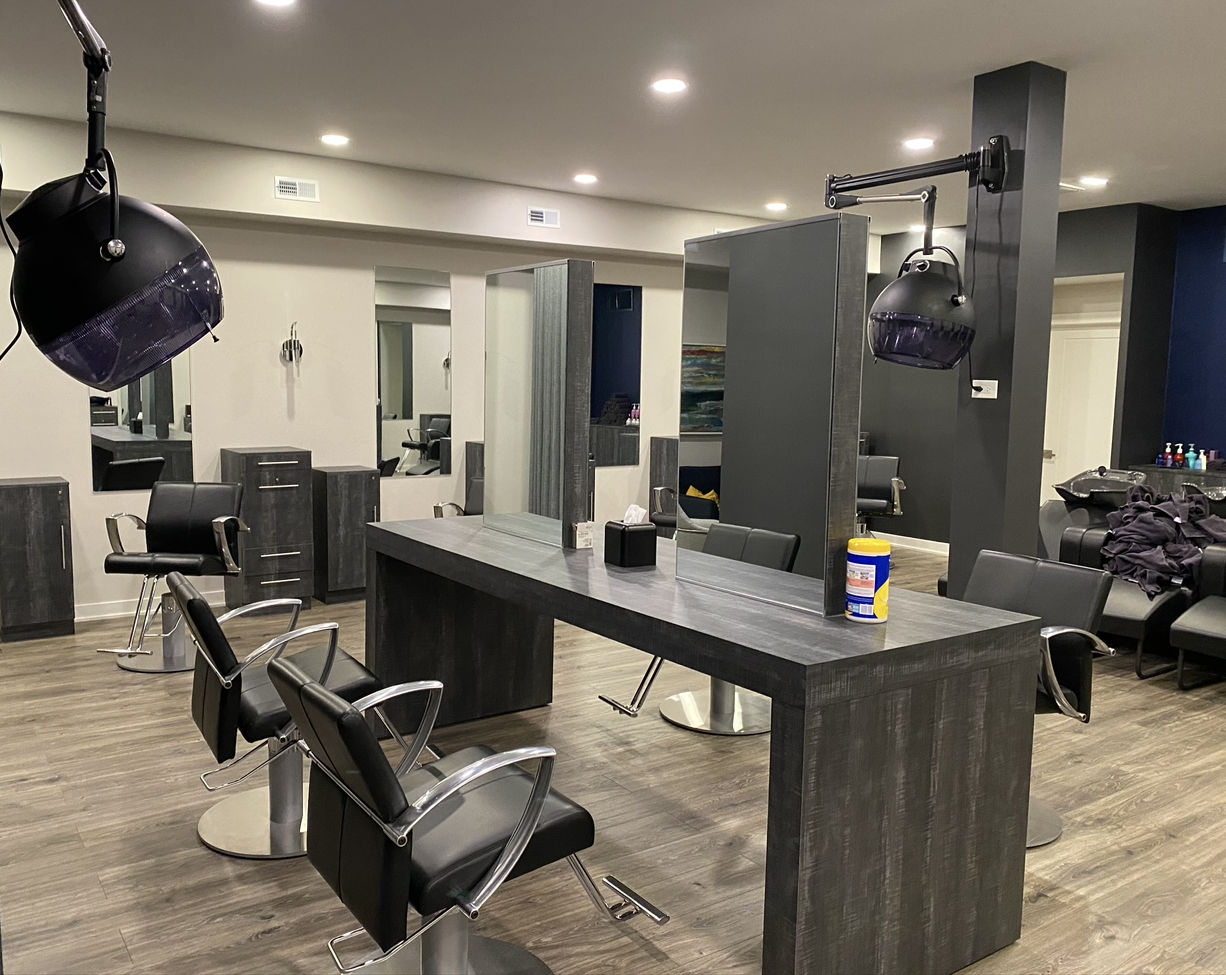
Chair rental at Salon Sapphire is $950 flat per month and includes a secured private station, towel service, facility cleaning, client refreshments, and a busy downtown Clarendon Hills location. Renters keep their own book, booking system, and pricing. Carey Ockrim coaches every renter through the business setup — LLC formation, banking, insurance, software — that most stylists were never taught.

Run Your Own Numbers

Average your last six months of service revenue, including the slow months, and run both columns. At $950 rent, consistent revenue above roughly $3,500 a month favors the rental column. Full details are on our [Rent a Chair page], or text (630) 853-1670 to tour the space in downtown Clarendon Hills.

Homecoming Hair Starts Now: When to Book Your Fall Color

Fall Hair Color Trends 2026: What Clarendon Hills Is Asking For

Blonde balayage hair color for homecoming at Salon Sapphire in Clarendon Hills IL

Key Takeaways:

  • Warm tones rule fall 2026: copper, caramel balayage, and rich all-over reds are the most-requested colors in our chairs

  • Peekaboo and hidden panels give bold color without the commitment — perfect for school and work dress codes

  • Balayage grows out gracefully, making it the lowest-maintenance way to go lighter or warmer

  • Book color 2–3 weeks before homecoming or family photos so it settles perfectly

Every fall, the color requests in our chairs shift like the trees on Burlington Avenue. The summer blondes soften. The warm tones come out. And every year, a few trends rise to the top of the request list. Here's what our independent stylists are seeing this season in Clarendon Hills — and how to pick the one that fits your life.

Copper is having its moment — again. If you've scrolled Instagram lately, you've seen it: rich, dimensional copper that catches light like October leaves. What makes copper work is customization. A skilled colorist adjusts the tone — more golden, more auburn, more spice — to flatter your skin instead of fighting it. It works on natural curls, sleek cuts, and everything between. If you've never colored your hair before, copper on your natural base is one of the most forgiving places to start.

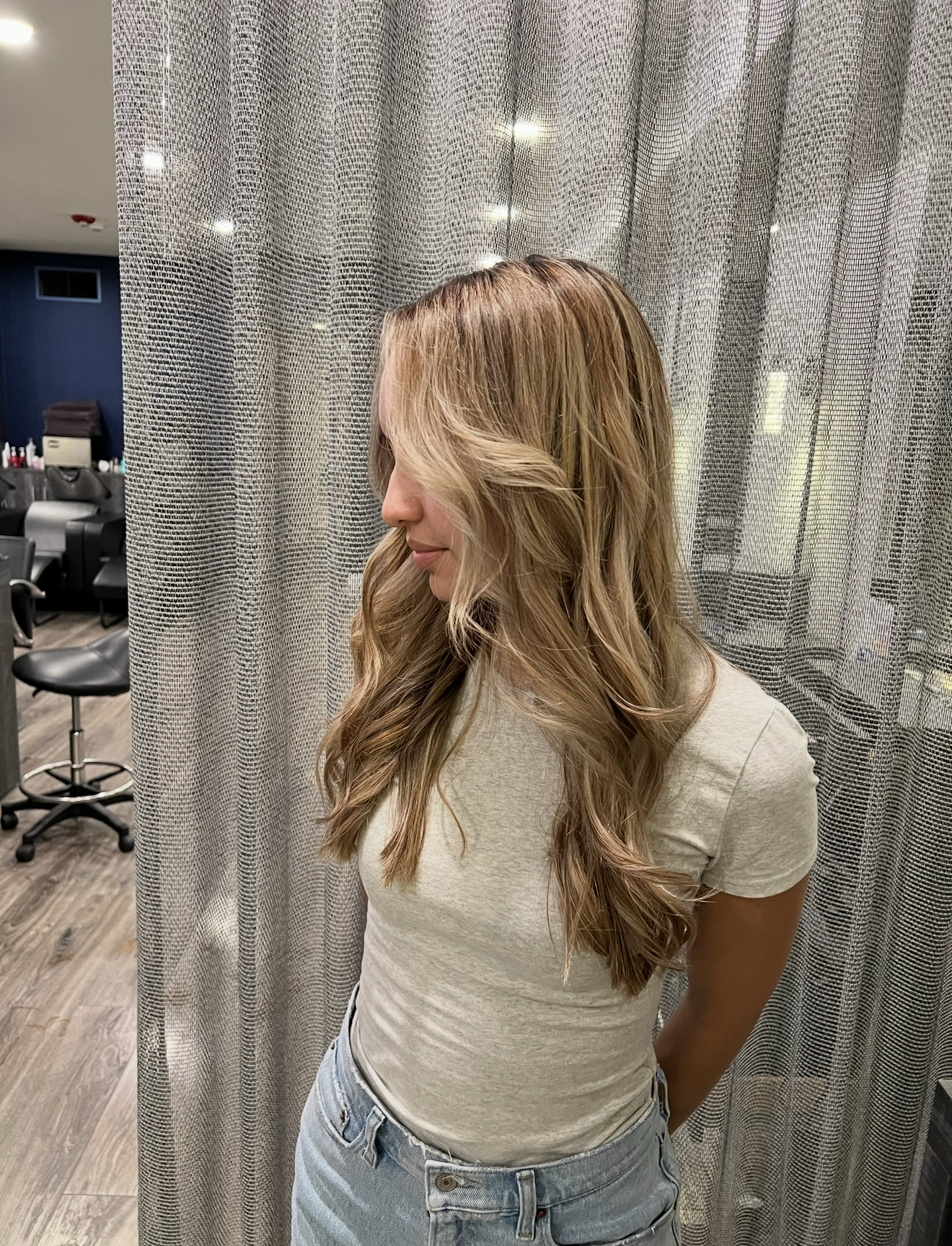
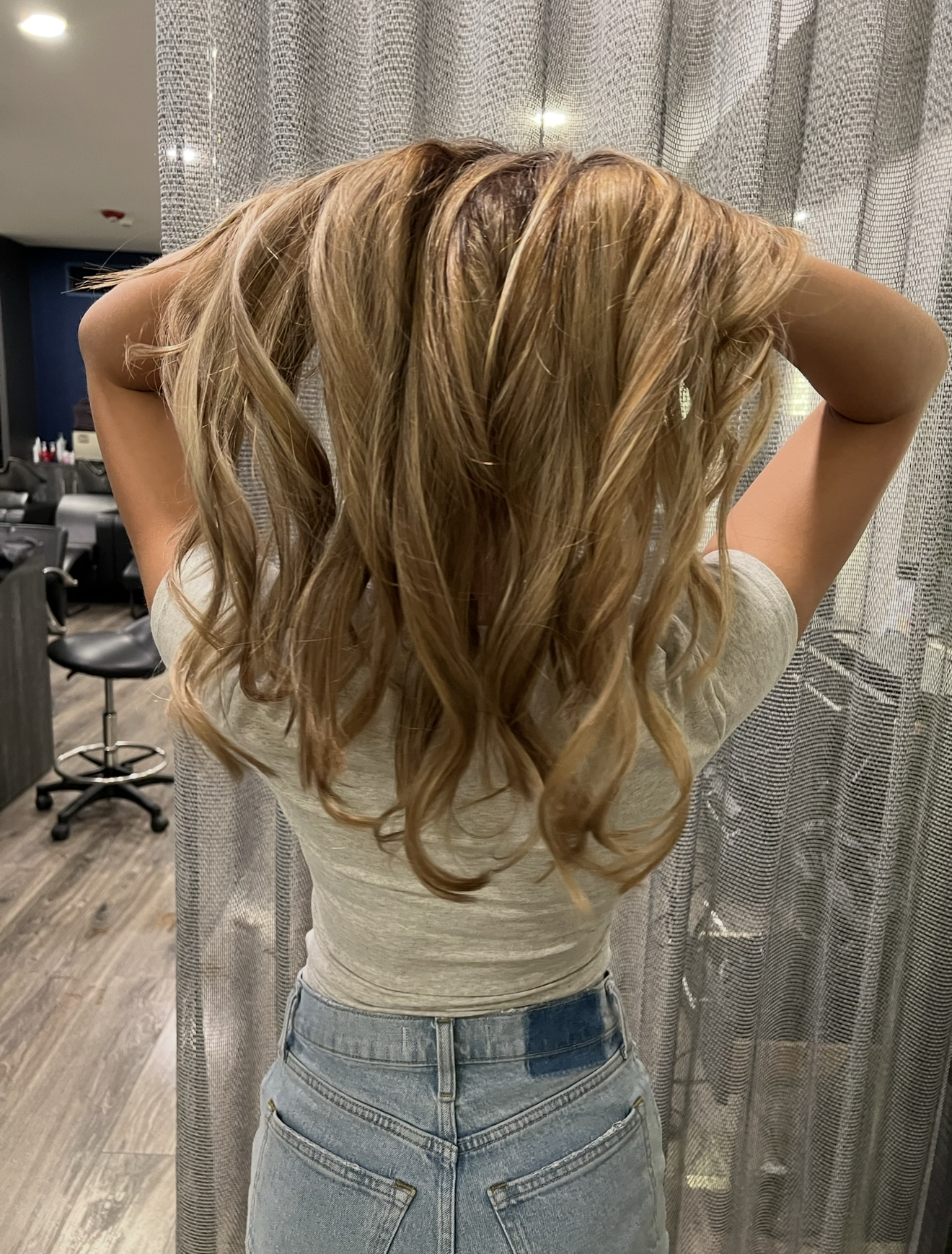
Caramel balayage is the low-maintenance champion. Balayage — hand-painted color that melts from a deeper root into lighter ends — grows out without a hard line. That means fewer touch-ups, lower cost over time, and color that looks intentional at week one and week ten. For brunettes who want warmth without a dramatic change, caramel ribbons through the mid-lengths and ends are the answer. It's the "I want change but not TOO much change" choice, and it's our most-booked fall service.

Bold reds are back for the commitment-ready. All-over vibrant red — glossy, saturated, impossible to miss — is the statement of the season. Fair warning from our colorists: red is gorgeous and red is work. It fades faster than other tones, so plan on gloss refreshes and color-safe care. If you're ready for that, nothing turns heads harder.

Peekaboo color solves the dress-code problem. For students, teachers, nurses — anyone whose school or workplace frowns on fashion color — hidden panels are the loophole. A cherry-red streak or pastel layer tucked under the top layer of hair shows when you want it and disappears when you don't. It's the most-requested teen service in our salon right now, and parents love that it doesn't require bleaching the whole head.

Timing matters more than people think. Fresh color needs a week or two to settle — tones soften, gloss calms, and everything starts looking like you rather than like a salon visit. If you've got homecoming, senior photos, or a family session on the calendar, book your color two to three weeks out. (And if you need event styling the day of, that's a separate appointment — our stylists do those too.)

The best part about fall color: you don't have to guess. Every colorist at Salon Sapphire offers a complimentary consultation — bring your inspiration photos, talk through your maintenance tolerance honestly, and leave with a plan that fits your hair, your budget, and your calendar. Our independent stylists each have their own specialties, from dimensional balayage to vivid fashion color, so you can book directly with the pro whose work matches what you want.

Fall is the season our chairs fill fastest. Call or text (630) 853-1670, or book directly with your stylist — and walk into the season with color that looks like it was made for you. Because it was.